No hay productos en la cesta.

No hay productos en la lista de deseos.
Envío gratuito
Especiales Semanales Ir de compras
Vortex Archives – Hunter Optics
Vortex Archivos - Hunter Optics
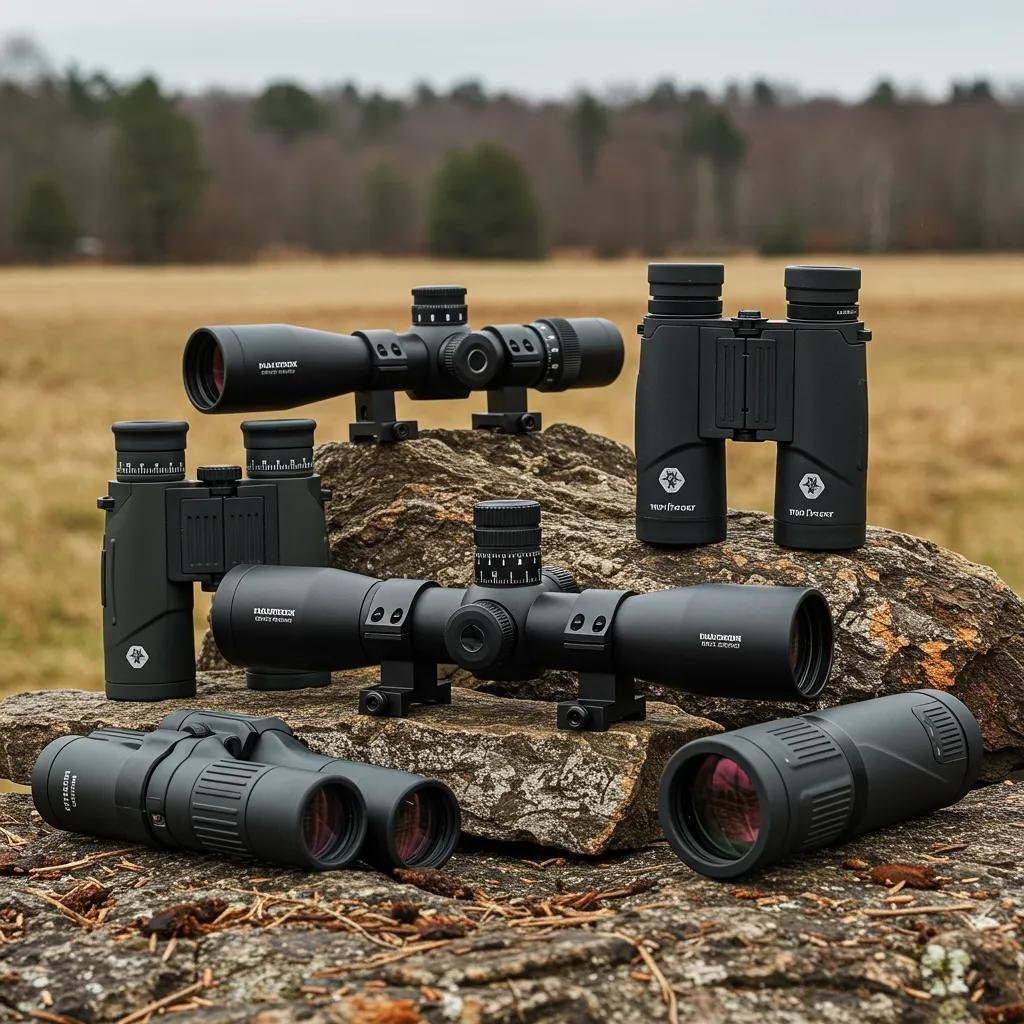
High-Performance Hunting Optics: The Ultimate Guide to Best Rifle Scopes and Firearm Optics Reviews 2025
High-performance hunting optics combine precision glass, robust mechanics, and real-world features that help hunters detect, identify, and ethically harvest game across challenging light and terrain conditions. This guide decodes the technical attributes that drive scope performance in 2025, explains how those attributes translate into field advantages, and maps practical recommendations to common hunting scenarios so readers can make confident purchase decisions. Many hunters struggle to parse marketing claims about glass, coatings, reticles, and durability; this article reduces that complexity with clear definitions, decision frameworks, and comparative tools. You will learn which optical features matter most for dawn/dusk work, how to match magnification and objective size to your hunting environment, and how to maintain optics for reliable field performance. The guide then compares rifle scopes, red dots, rangefinders, and thermal options with EAV-style comparison tables and review snippets. Finally, we provide stepwise selection criteria for long-range hunting optics and practical maintenance best practices to preserve accuracy and longevity.
What Are the Key Features of High-Performance Hunting Optics?
High-performance hunting optics are defined by four core pillars: optical performance, mechanical precision, environmental durability, and user-oriented features that simplify aiming and range estimation. Optical performance centers on glass quality and coatings that increase light transmission and contrast; mechanical precision covers turrets and internal adjustments that preserve point-of-impact across shots; durability ensures waterproof, fogproof, and shockproof reliability; and user features like reticle design and illumination enable faster, more repeatable shots. These pillars work together to improve detection, identification, and shot placement in low-light and complex terrain. Understanding these components allows hunters to prioritize trade-offs—such as weight versus objective size—based on their typical hunt profile, and leads naturally into the specific role of glass quality and magnification choices described next.
This checklist helps prioritize purchase features before diving into brand comparisons and model-level trade-offs.
- Optical clarity and advanced lens coatings: Better glass and multi-coatings increase light transmission and contrast for dawn/dusk identification.
- Precise turret adjustments: Repeatable, audible turrets with consistent click values maintain zero and support holdover corrections.
- Durability and sealing: Waterproof, fogproof, and shock-resistant construction preserve function in harsh field conditions.
How Does Optical Clarity and Glass Quality Impact Hunting Performance?
Optical clarity refers to resolution, contrast, and color fidelity produced by the scope’s glass and coatings; it matters because detection and positive identification at range rely on clear, high-contrast images. High-quality glass combined with multi-layer anti-reflective coatings increases light transmission and reduces glare, which directly improves target ID during low-light windows. The mechanism is straightforward: better light transmission raises perceived brightness, while coatings preserve contrast by minimizing internal reflections and scattering. When evaluating spec sheets, look for references to ED or HD glass and multi-coating technologies as shorthand for improved performance. These optical gains reduce observer fatigue and increase confidence in low-visibility shots, which then raises the importance of choosing appropriate magnification and objective diameter for your hunting scenarios.
Why Are Magnification and Objective Lens Size Crucial for Hunting Scopes?
Magnification determines how large a target appears and affects field of view and target acquisition speed; objective lens size governs light-gathering capacity and influences low-light performance and scope profile. Lower magnification and smaller objectives favor fast target acquisition in brush or short ranges, while higher magnification and larger objectives support identification and precision at longer distances but add weight and bulk. The reason is physical: larger objective diameters collect more photons, improving image brightness at a given magnification, but increase scope height and susceptibility to snagging. Practical recommendations vary by scenario—close-range brush hunts generally favor 1–6× or LPVO styles, open-country hunts benefit from 3–12× or higher depending on expected engagement distances—so combine magnification range and objective size to balance visibility, weight, and field ergonomics. Choosing the right combo also sets the stage for reticle selection and mounting considerations discussed later.
Which Are the Best Rifle Scopes for Hunting in 2025?

A concise way to approach “best” scopes is to categorize by intended use: best overall (versatile, reliable), best for long-range precision, best for low-light performance, and best value/budget. Each category prioritizes different feature sets—premium glass and turret fidelity for long-range, large objective and coatings for low-light, and durable construction with essential features for value picks. Below is an EAV-style comparison for common model categories to clarify trade-offs across these attributes and typical price ranges in the market.
| Model Category | Key Attribute | Typical Value |
|---|---|---|
| Premium Long-Range | Magnification & turret precision | 4–16× to 5–25×; tactical-style exposed turrets |
| Low-Light Hunting | Objective diameter & coatings | 50–56 mm objectives; advanced multi-coatings |
| Versatile Field | Weight vs magnification | 1–6× or 3–18× with sub-900 g weight |
| Budget/Value | Durability & core features | Simplified reticles; sealed tubes; lower-cost glass |
This comparison highlights how category selection aligns to hunter priorities and helps narrow model-level choices.
What Makes Vortex Hunting Scopes Stand Out in 2025?
Vortex has become synonymous with a value-oriented lineup that balances robust mechanical design, useful feature sets, and accessible warranties—attributes that are particularly attractive to hunters who want dependable optics without premium price tags. The brand’s product tiers typically span budget-friendly options up to premium lines that prioritize high-transmission glass and refined turret systems, delivering a balance of clarity and mechanical reliability. Vortex’s warranty approach and service network are often cited as a practical ownership benefit that reduces long-term risk when selecting optics for demanding field use. These brand-level strengths frame the comparison to other manufacturers, which often emphasize different combinations of glass pedigree, customization, and boutique manufacturing approaches.
How Do Leupold and Burris Compare to Vortex in Rifle Scope Performance?
Leupold and Burris historically focus on slightly different trade-offs compared with value-oriented competitors: Leupold often emphasizes consistent optical coatings, lightweight designs, and long-established mechanical reliability, while Burris commonly targets solid optics with competitive pricing and practical feature sets. Compared to value-oriented lines, each manufacturer may deliver marginally different optical character—one may prioritize color neutrality and another may emphasize ruggedness or price-to-feature balance. The practical implication is that hunters should weigh glass clarity, turret fidelity, and warranty/service expectations against cost. This balanced view helps steer buyers toward the product family that best matches their field priorities rather than chasing a single “best” badge.
How to Choose the Right Long-Range Hunting Optics for Your Needs?
Choosing the right long-range hunting optic begins with a decision framework that links hunting distance, expected game size, and typical light conditions to optical features like reticle type, focal plane, eye relief, and parallax controls. The mechanism is decision mapping: select features that directly solve the practical challenge you face (e.g., consistent holdovers for varying magnification, or parallax control for precise aim at 600+ yards). Prioritize a reticle/focal plane combination that supports your ballistic approach and ensure eye relief and parallax controls complement your rifle platform and shooting posture. To make that selection tangible, the table below maps reticle/focal plane combinations to recommended hunting distances and game types.
| Reticle/Focal Plane | Attribute | Recommended Use |
|---|---|---|
| Primer plano focal (FFP) | Holdovers scale with magnification | Long-range hunters using holdover at varied zoom |
| Second Focal Plane (SFP) | Reticle size remains constant | Hunters who use fixed subtensions or low-power ranging |
| Mil-based reticle | Subtension-based ranging | Precision ballistic solutions and range estimation |
| MOA-based reticle | Inch/yard familiar units | Hunters preferring MOA adjustments and simpler math |
This matrix shows how pairing reticle type with focal plane supports specific distance and ballistic workflows.
- Define expected engagement distances: Match magnification range to the farthest ethical shot you anticipate taking.
- Choose focal plane by aiming method: FFP for variable-magnification holdovers, SFP for consistent subtension at one magnification.
- Verify parallax range and turret calibration: Ensure parallax adjustment and turret calibration cover your ballistic zero and typical environmental conditions.
Following this checklist reduces guesswork and leads naturally to practical considerations for eye relief and parallax that influence accuracy and safety.
What Reticle Types and Focal Planes Are Best for Long-Range Shooting?
For long-range shooting, first focal plane (FFP) reticles offer holdover marks that remain accurate across the magnification range, making them ideal for dynamic-range scenarios where magnification varies between ranging and engagement. Mil-dot and mil-based reticles are favored when using metric-based ballistic tables or laser rangefinder outputs, while MOA reticles align to imperial adjustment systems for shooters who prefer minute-of-angle math. The reason FFP is preferred in many long-range hunting contexts is semantic: the reticle’s subtensions scale with the image, so holdovers remain true at any magnification, reducing the mental calculation required under field pressure. That said, SFP reticles remain popular for hunters who zero at a specific magnification and want consistent reticle visibility. Choosing the right reticle also depends on personal familiarity and whether external ballistic calculators will be used in the field.
How Important Are Eye Relief and Parallax Adjustment in Long-Range Optics?
Eye relief directly influences shooter safety and repeatability, especially on high-recoil platforms; recommended practical ranges typically fall between 3.5 and 4 inches for many centerfire rifles, though specific values depend on platform and scope design. Parallax adjustment removes image focus misalignment between the reticle and target plane, which is critical for precise long-range shots where even small sighting errors translate to sizeable point-of-impact shifts. The mechanism is simple: parallax error introduces apparent reticle movement relative to the target when the shooter’s eye position changes, and correcting parallax centers the optical planes to reduce that error. To set parallax, dial the adjustment until the target and reticle remain stationary as you move your head slightly; this process preserves accuracy and should be verified during zeroing and at typical engagement distances. Proper attention to these settings prevents surprises during real hunts and feeds into mounting and maintenance practices.
What Are the Top Firearm Optics Reviews and Comparisons for 2025?
This section aggregates how different optic types perform across hunting tasks—riflescopes, red dot sights, LPVOs, rangefinders, and thermal imagers—summarizing strengths, typical limitations, and best-use scenarios. The goal is to make cross-category trade-offs explicit so hunters can select combinations that complement their methods and platform. Below is an EAV-style table comparing optic types for typical hunting use-cases.
| Optic Type | Core Attribute | Best-For |
|---|---|---|
| Riflescope (variable) | Precision and magnification range | Long-range and precision hunting |
| LPVO / Low-Power | Speed and variable close-to-mid zoom | Versatile brush-to-mid-range hunts |
| Red dot sight | Fast target acquisition, parallax-free at short ranges | Shotgun, close brush, quick follow-ups |
| Rangefinder | Distance measurement accuracy | Ethical range confirmation for long shots |
| Thermal imager | Detection in clutter/low-visibility | Night hunting and detection over foliage |
This table clarifies where each optic type excels and how combinations (e.g., red dot plus rangefinder) create complementary capabilities.
Which Red Dot Sights and Rangefinders Are Best for Hunting?
Red dot sights excel in quick-acquisition situations because they present an illuminated aiming point that aligns with the target plane without magnification complexity. Effective hunting red dots balance battery life, dot clarity, and ruggedness while minimizing weight. Rangefinders contribute critical distance data that converts into ethical holdover or turret adjustments; accuracy and effective range depend on optical quality and ranging algorithms. A recommended pairing for many hunters is a fast-acquisition red dot for close brush work combined with a compact rangefinder for instant distance confirmation at medium ranges—this fusion reduces cognitive load at the shot moment. The practical trade-offs involve choosing a rangefinder with reliable readings in clutter and a red dot with durable, water-resistant construction to withstand field conditions.
How Do Thermal Imaging and Night Vision Optics Enhance Hunting?
Thermal imaging detects heat signatures rather than relying on ambient light, enabling detection of animals behind vegetation or in low-visibility conditions; night vision amplifies available light to create usable images under starlight or moonlight. Thermal advantages include detection at range through clutter and consistent functionality in total darkness, while night vision tends to provide more detailed visual features in low-light contexts. Sensor resolution, refresh rate, and image processing determine usable detection versus identification ranges—higher resolution increases ID range but also raises cost and power demands. Hunters should also consider legal and ethical frameworks governing night devices in their jurisdiction and integrate detection tools into responsible engagement practices. These technologies reshape how hunters locate targets but require training and situational awareness to use responsibly.
How to Maintain and Care for High-Performance Hunting Optics?
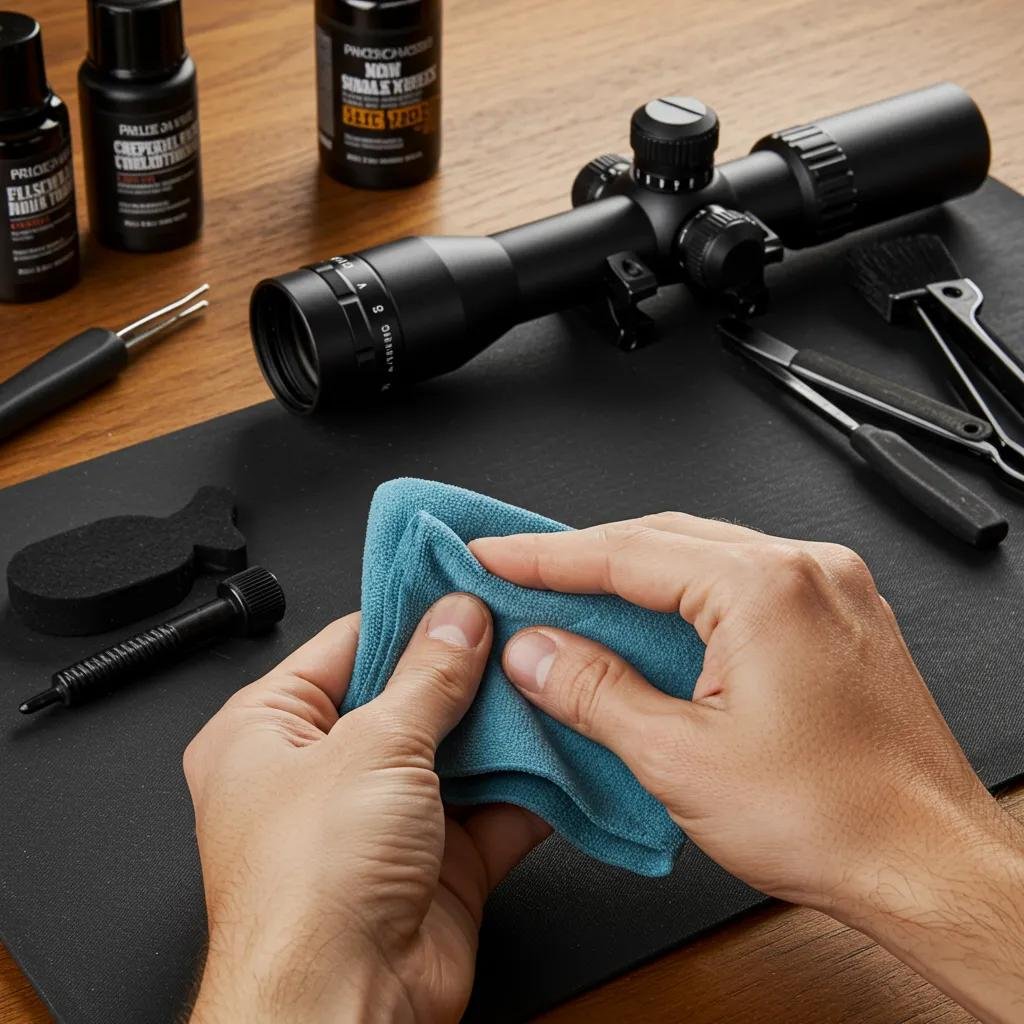
Proper maintenance preserves optical clarity, mechanical function, and waterproof sealing, extending the service life of hunting optics and maintaining accuracy. Cleaning should prioritize non-abrasive tools and correct sequence: remove dust with an air blower, dislodge particulates with a soft brush, and finish with a microfiber cloth and a small amount of lens cleaner formulated for coated optics. Protective measures include padded cases, lens caps, and using covers during transport to prevent impacts and scratches. Regular checks on mounting torque, ring alignment, and turret function prevent mechanical drift and reduce the chance of loss of zero. These practices reduce field failures and maintain performance across seasons, leading into specific cleaning steps and mounting guidance in the following subsections.
- Daily field care: Use a lens cover and quick micro-clean between stalks.
- Periodic deep clean: Air blower, soft brush, and approved lens solution monthly or after heavy exposure.
- Storage: Remove batteries for extended storage, use desiccant packs in cases, and store in a cool, dry place.
These steps form a practical routine that preserves optical and mechanical integrity.
What Are the Best Practices for Cleaning and Protecting Rifle Scopes?
Cleaning begins with removing grit using an air blower followed by a soft brush; this prevents scratching when you subsequently wipe surfaces. For lenses, apply a manufacturer-recommended lens solution sparingly and wipe with a lint-free microfiber cloth using gentle circular motions—avoid household cleaners and tissues that contain abrasives or chemicals. Protect optics with fitted lens caps, padded cases, and neoprene covers for transport and when hunting in wet or snowy conditions; these accessories prevent impact damage and reduce exposure to contaminants. In the field, use quick-clean kits that prioritize safe dust removal and minimal liquid to avoid ingress through seals. These protective habits sustain coatings and mechanical seals that are essential for long-term optical performance and reliability.
How Does Proper Mounting Affect Optic Performance and Durability?
Proper mounting aligns the optic to the bore axis and secures it against recoil-induced movement, both of which are essential for repeatable accuracy and to prevent mechanical damage. Use ring spacing and base selection that match the scope tube and rifle platform, and apply torque settings recommended by the mount manufacturer to avoid over- or under-tightening; improper torque can deform the tube or slip under recoil. Verification steps include bore sighting, confirming eye relief and head position, and performing live-fire confirmation to validate zero and repeatability. Regular re-checks after heavy recoil or transport ensure mounts remain secure. Good mounting practices preserve turret calibration, protect the optic from mechanical stress, and maintain point-of-impact consistency.
What Emerging Technologies Are Shaping the Future of Hunting Optics?
Emerging technologies center on three converging trends: smart connectivity and onboard ballistic assistance, incremental advances in glass coatings that improve light transmission, and hybrid optical-thermal systems that integrate detection with traditional optics. Smart features enable ballistic profile storage, external sensor integration, and data sharing, changing how hunters prepare for variable-range shots. Coating advancements increase contrast and lower stray light, leading to tangible improvements in low-light target ID without significant weight penalties. Hybrid sensors and improved thermal cores expand detection capabilities while seeking to remain compact and energy efficient. These trends collectively shift the hunter’s workflow toward more data-informed decision-making while also introducing new considerations about battery management and device reliability.
How Are Smart Features and Connectivity Improving Firearm Optics?
Smart features provide ballistic calculators, range-to-hold algorithms, and profile storage that speed up range estimation and aiming decisions, particularly when paired with data from laser rangefinders or environmental sensors. The mechanism is semantic: the optic becomes a platform that processes inputs (range, angle, wind) and outputs suggested aiming points, reducing cognitive load for the shooter. Benefits include faster, more consistent holdovers and the ability to save custom profiles for specific ammunition and rifles. Trade-offs include increased battery dependency and greater device complexity, which require planning for power management and redundancy in the field. These technologies are most beneficial in situations where rapid ballistic computations improve ethical shot selection at extended ranges.
Development of Smart Rifle Accessories: Enhancing User Experience Through Modern Technology
ABSTRACT: The rifle stands as one of the oldest manufactured products with a dedicated field of accessory development, originating with telescopic sights over a century ago, designed to improve user capability and experience. As technology has advanced, so too have rifle accessories and the rifles themselves. Iterative improvements have resulted in more robust, accurate, and lighter products. This thesis, undertaken for Sako, a Finnish rifle manufacturer, aims to expand their understanding of the future of rifles, rifle accessories, and their interoperability.
The thesis seeks to provide the reader with foundational knowledge of rifles, their accessory products, and the integration of emerging technologies for an enhanced user experience. This is achieved through a review of existing rifle accessory products, an introduction to emerging technology trends in product development such as IoT devices and their operational principles, and an examination of how other businesses have…
Developing smart accessories for rifles, 2024
What Are the Latest Advances in Glass Coatings and Reticle Designs?
Recent coating innovations focus on multi-layer anti-reflective treatments and phase-correction elements that jointly increase light transmission, improve edge-to-edge sharpness, and preserve contrast in low light. The technical result is clearer images with less flare and higher perceived brightness, which supports detection and identification. Reticle design trends include subtle ranging marks, illumination systems tuned for low-light contrast, and hybrid patterns that blend holdover stadia with simple BDC cues. These incremental advances combine to produce optics that deliver meaningful field advantages—better ID at dusk, faster ranging, and more usable reticle information—without fundamentally changing how hunters aim but by improving the quality of the visual and data inputs.
For hunters ready to move from research to purchase, consider exploring high-performance optics from reputable manufacturers that emphasize glass quality, turret precision, and reliable service policies. Prioritize models that match the decision framework laid out earlier—choose reticle/focal plane combinations for your typical engagement distances, confirm parallax and eye relief compatibility with your rifle, and factor in warranty/service support for long-term ownership. Responsible purchasing leads to better field outcomes and sustained performance across seasons.