У кошику немає товарів.
Немає товарів у списку бажань.
Безкоштовна доставка
Щотижневі акції Іди за покупками.
Master the Art of Red Dot Mounting: A Step-by-Step Guide
Master the Art of Red Dot Mounting: A Step-by-Step Guide
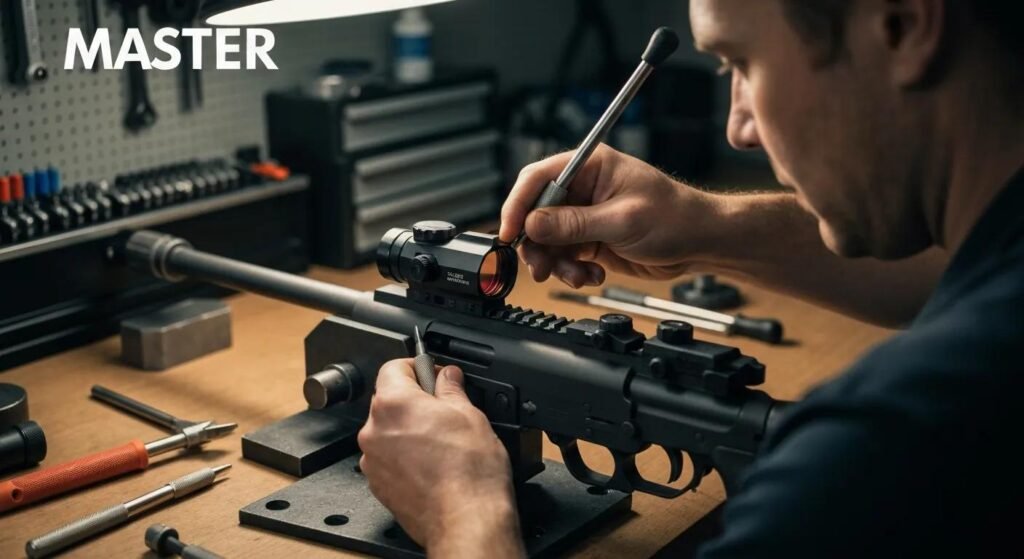
Master Red Dot Sight Installation
Mounting a red dot sight correctly is essential for reliable accuracy, repeatable zero, and rapid target acquisition across pistols, rifles, and AR-15 platforms. This guide teaches exactly what you need to prepare, the tools and materials required, platform-specific installation steps, how mounting systems and footprints affect compatibility, and the proven procedures to zero and maintain your red dot sight. Many shooters encounter lost zero, improper torque, or footprint mismatch that lead to poor performance; this guide addresses those problems with practical solutions and clear troubleshooting paths. You’ll get step-by-step instructions for AR-15 and pistol installations, a breakdown of Picatinny, dovetail, and direct-mount systems, torque and thread-locker best practices, and accessory guidance for risers and offset mounts. Read on to learn how to mount a red dot sight safely and precisely, plus where to find compatible optics, mounts, and accessories if you’re ready to outfit your firearm.
What Tools and Materials Do You Need for Red Dot Sight Installation?
A successful red dot mount begins with the right preparation: inspect the firearm to ensure it is unloaded and pointed in a safe direction, clean mating surfaces to remove oil and debris, and gather the tools that enable correct torque and repeatable assembly. Proper tools prevent stripped screws, over-torquing, and mounting play, and they make it straightforward to apply medium-strength thread locker where recommended. The following list summarizes essential tools and why each matters to ensure stable, long-term mounting and accurate zero retention.
- Torque wrench sized for small fasteners to achieve manufacturer torque without over-tightening.
- Correct driver bits or Allen keys to prevent screw head damage during installation.
- Cleaning supplies (isopropyl wipes, soft brush) to prepare mounting surfaces and remove oils.
- Thread locker (medium-strength blue) to reduce screw back-out while allowing future removal.
- Adapter plates, risers, or rail sections appropriate to your firearm’s footprint and sight.
These tools set up the installation phase effectively and lead into specific product suggestions and a concise tool comparison table that helps you choose the right gear for the job.
Before the table, note that Hunter Optics curates high-performance optics, mounts, and toolkits from brands like Vortex, Athlon, and Riton, and stocks common adapter plates and torque wrenches for red dot mounting. If you prefer to buy a complete kit or specific components, their selection and customer-support policies (including free worldwide shipping on qualifying orders and easy returns) can be helpful once the project plan is set. The table below compares typical tools by use-case and where they add value in the installation workflow.
| Tool | Recommended Use | Typical Purchase Note |
|---|---|---|
| Torque wrench (0–65 in-lb range) | Accurate tightening of optic and mount screws | Choose a small-range wrench for precision |
| Allen/Hex driver set | Fastener engagement without rounding heads | Hardened bits reduce wear |
| Thread locker (blue) | Prevents screw loosening while allowing removal | Medium strength is standard for optics |
| Cleaning kit (isopropyl wipes, brushes) | Removes oils and debris for proper seating | Essential step before mounting |
Which Essential Tools Are Required for Mounting a Red Dot Sight?
Essential tools let you install a red dot sight without damaging fasteners or the optic housing, and they provide the repeatability needed to maintain zero. A calibrated torque wrench with a low-in-lb range prevents over-torque that can strip screw threads or damage mounting bosses, while a set of hardened driver bits ensures secure engagement with screw heads. Cleaning materials remove oils that reduce clamp friction and cause slippage, and a small punch or drift helps align plates or remove factory plates on pistols. Proper lighting and a stable workbench or vise with non-marring jaws also make precise alignment easier and reduce the risk of accidental damage during installation. These tools set up the next consideration—how thread locker choices affect mounting stability—by enabling correct application and torque.
How Does Thread Locker Improve Red Dot Sight Mounting Stability?
Thread locker prevents vibration-induced screw back-out, which is a common cause of lost zero on red dot sights. Medium-strength thread locker (often referred to as “blue”) is the typical choice because it secures screws under recoil yet allows future removal with hand tools; high-strength options can fuse fasteners and should be reserved for permanent or gunsmith-applied installations. Apply a drop to the screw shank and avoid excess that can migrate into optic internals; allow full cure time per product guidance before firing. If you anticipate frequent disassembly for maintenance or optics swapping, minimize thread locker usage or clean threads thoroughly before reassembly. Understanding thread locker behavior leads directly into platform-specific mounting workflows where correct application and torque are critical.
How Do You Mount a Red Dot Sight on Different Firearms?
Mounting procedures differ by platform due to variations in mounting surfaces, slide or rail geometry, and footprint compatibility, but the core principles—safety, clean mating surfaces, proper torque, and verification—remain constant. For AR-15s, prioritize rail engagement and co-witness with iron sights when appropriate; for pistols, verify whether the slide is optic-ready or requires an adapter plate; for rifles, consider riser height and eye relief for comfort and accuracy. The numbered sequences below give the first practical steps for each platform to capture the main flow of work quickly.
- Clear the AR-15 and remove ammunition; verify the chamber is empty and the magazine removed.
- Decide mounting position on the Picatinny rail (forward placement for magnifier clearance, rearward for co-witness).
- Install mount or riser if needed, seat the optic, and hand-tighten screws before torquing to spec.
These initial steps set up the installation; the subsequent paragraph expands into torque application and verification.
What Are the Step-by-Step Instructions to Mount a Red Dot Sight on an AR-15?
Mounting a red dot on an AR-15 begins with safety: clear the rifle and ensure the action is open or the upper is separated if that makes access easier. Choose a mounting location that balances cheek weld, sight picture, and accessory clearance—forward mounts improve rapid target acquisition and magnifier compatibility while rear mounts allow easier co-witness with iron sights. Seat the mount fully on the Picatinny rail and align the optic so the base contacts rail surfaces without rocking; hand-tighten fasteners, then torque in small increments in a cross or alternating pattern to specified values. Finally, bore-sight the optic to reduce live-fire adjustments, then verify and refine zero at the range; this progression leads directly to the platform-specific considerations for pistols covered next.
How Do You Mount a Red Dot Sight on a Pistol Using Adapter Plates?
Pistol installations require attention to slide interface and footprint compatibility: determine whether your slide is factory optic-ready, uses a removable plate, or needs an adapter plate to accept a red dot footprint. Remove the existing plate or rear sight per manufacturer instructions, clean mating surfaces, then align and fasten the adapter plate with correct torque and thread locker when specified. Seat the red dot on the adapter plate and follow the optic manufacturer’s screw sequence and torque values, then cycle the slide to ensure no interference with sights or slide rails. If slide milling would be necessary for a permanent direct mount, consult a qualified gunsmith; this cautionary step naturally leads into understanding mounting systems and footprints.
What Are the Different Mounting Systems and How Do They Affect Installation?
Mounting systems—Picatinny rails, dovetail mounts, direct mounts, risers, and offsets—create different mechanical interfaces that dictate how a red dot attaches, how height and co-witness are achieved, and which adapter plates are necessary. Picatinny rails provide repeatable indexed locations and are common on AR platforms, while dovetails rely on friction-fit or clamp systems often found on rimfire rifles and some pistols. Direct mounts and slide-cut footprints attach the optic directly to the slide or receiver and can offer the lowest profile but require exact footprint matching. Understanding these differences helps you select the right adapter plate or riser and prevents compatibility surprises during installation.
Below is a quick compatibility and use-case table to compare mount types and guide selection for your platform.
| Тип кріплення | Height/Compatibility | Ideal Use Case |
|---|---|---|
| Picatinny | Variable heights; indexed slots | AR-15s, rifles needing repeatable mounting |
| Dovetail | Low-profile; platform-specific fit | Rimfire rifles, some pistol slides |
| Direct mount | Footprint-specific, low profile | Optic-ready slides and cut receivers |
| Riser | Adds vertical height; co-witness adjust | Improves cheek weld and magnifier clearance |
| Offset mount | Lateral displacement; alternate sight line | Backup irons and CQB setups |
How Do Picatinny Rails, Dovetail Mounts, and Direct Mounts Differ?
Picatinny rails secure mounts via indexed slots and clamps, offering high repeatability and modular placement flexibility; their standardization makes them common on tactical and AR-style platforms. Dovetail mounts are low-profile and often require precise fitting or staking, providing a compact mounting option on smaller rifles or pistols but with less positional adjustability. Direct mounts rely on optic-specific footprints machined into the slide or receiver, delivering the lowest possible sight profile and excellent rigidity but requiring exact footprint compatibility or adapter plates. Recognizing these mechanical differences informs your adapter plate and riser choices and leads naturally into a discussion of footprints that governs pistol mounting decisions.
What Are Red Dot Sight Footprints and How Do Adapter Plates Work?
Red dot footprints are the pattern of screw holes and bosses that secure the optic to a mounting surface; common footprints include RMR, RMSc, Docter/Trijicon-style, and Shield patterns. Adapter plates translate slide or rail mounting interfaces into the optic’s footprint by providing the correct hole spacing and boss locations, enabling non-optic-ready slides to accept popular micro red dots. When choosing an adapter plate, match both the plate-to-slide interface and the plate-to-optic footprint to avoid poor fit or undue stresses on screws. Non-standard or proprietary footprints may require manufacturer plates or gunsmithing, so always verify compatibility before fastening an optic, which leads into zeroing and validation steps after installation.
How Do You Zero and Adjust Your Red Dot Sight After Mounting?
Zeroing a red dot sight involves bore-sighting to get the optic close to point of aim followed by live-fire adjustments to establish precise point-of-impact at a chosen distance. A proper zero sequence saves ammunition and reduces frustration: confirm stability of the mount and fasteners, bore-sight to center the dot, then fire groups and adjust windage and elevation in calculated clicks per manufacturer click values. Typical verification includes confirming zero after 20–30 rounds and re-checking torque and thread locker condition; these steps ensure a reliable sight picture and predictable performance under field conditions. The short stepwise overview below captures the core zeroing workflow for quick reference.
- Bore-sight to align the dot roughly with the bore before live fire.
- Fire a 3–5 round group at your chosen zero distance and note point-of-impact shifts.
- Make windage and elevation adjustments per click value, then confirm with additional groups.
These steps set expectations for click values and recommended zero distances discussed next.
What Is the Best Way to Zero a Red Dot Sight for Accuracy?
Choose a zero distance that matches your intended use—25 yards is common for pistols, 50–100 yards for rifles depending on ballistics and application—and begin with a stable rest and a multi-shot group to reduce shooter-induced variance. Calculate adjustments using the optic’s click value (commonly 1/2 MOA or 1 MOA per click on many sights) and apply corrections incrementally, then re-fire to confirm. For practical defensive setups, lower-distance zeros that favor point-of-aim/point-of-impact at typical engagement ranges are common, while competition or hunting setups may use longer-distance zeros for trajectory optimization. After establishing zero, verify that the mount remains tight and that thread locker has cured if applied; these verification steps flow into maintenance advice to prevent lost zero.
How Do You Maintain Zero and Troubleshoot Common Mounting Issues?
Maintaining zero starts with a routine check schedule: inspect mount screws, re-torque to specification if necessary, and clean mating surfaces to remove debris that can introduce play. If zero shifts occur, systematically check screw torque, thread locker condition, and seating of the optic on its mount; replace stripped screws or worn adapter plates and confirm the firearm’s barrel and action are properly secured. For persistent drift or repeatable shift under recoil, consider consulting a qualified gunsmith to inspect slide milling, receiver wear, or optic damage. These troubleshooting steps emphasize the importance of correct torque values and thread-locker selection covered in the next section.
What Are the Recommended Torque Specifications and Best Practices for Mounting?
Torque specifications vary by optic and screw size, but typical practice for red dot sight screws falls into a consistent range: small optic top or footprint screws often use low in-lb torque, while base or mount screws may require higher values to ensure clamp engagement. Correct torque sequence—gradual, alternating increments—reduces stress and promotes even seating. Apply medium-strength thread locker on screws that require retention but allow future removal, avoid over-application, and let curing times complete before firing to ensure full strength. The table below gives a practical quick-reference for common screw types and recommended Loctite guidance with a clear caveat to consult your optic’s manual for exact manufacturer values.
| Fastener Type | Typical Thread Size | Recommended Torque (in-lb) / Loctite |
|---|---|---|
| Optic footprint screws | M3–M4 range | 6–12 in-lb / Blue (medium) |
| Mount clamp screws | 4–6 mm hex | 15–30 in-lb / Blue (medium) |
| Base-to-rail screws | 6 mm or larger | 20–40 in-lb / Blue or per spec |
What Torque Settings Should You Use for Red Dot Sight Screws?
Begin by consulting the red dot and mount manufacturer documentation, as published torque values supersede general guidance; if unavailable, use conservative baseline values and verify them after a short break-in interval. Tighten screws in small increments and in an alternating pattern to seat the optic evenly and avoid bending mounting surfaces; use a calibrated torque wrench set to the target value and confirm each fastener. Over-torquing can strip threads or deform mounting bosses, while under-torquing can permit screw back-out and lost zero, so balance is critical. Once torqued, re-check after a few rounds of firing and again after 20–30 rounds to ensure retention; this approach leads directly into when to use blue Loctite during installation.
When and How Should You Apply Blue Loctite During Installation?
Apply a small amount of medium-strength thread locker (blue) to the screw shank where threads engage the mounting hole, avoiding excess that could squeeze into the optic body or contact areas. Use blue Loctite for most optic screws because it secures against vibrational loosening yet allows removal with standard tools; reserve high-strength (red) compounds for permanent installations only.
Allow the specified cure time before firing—typically several hours to reach handling strength and up to 24 hours for full cure—and re-check torque after the initial cure period. If you expect frequent swaps or need guaranteed removability, consider using a minimal application or tightening without thread locker while performing regular torque checks; this guidance naturally leads into accessory choices like risers and offsets that affect co-witness and eye relief.
How Can Accessories Like Risers and Offset Mounts Enhance Your Red Dot Setup?
Accessories such as riser mounts, magnifiers, and offset mounts let you tailor red dot placement to your shooting style, cheek weld, and iron-sight co-witness preference, improving ergonomics and sight acquisition. Risers increase optic height to achieve absolute or lower 1/3 co-witness with iron sights, and they can aid magnifier alignment; offset mounts provide alternate sightlines for close-quarters engagement or secondary sighting systems. Choosing the right accessory requires balancing height, weight, and compatibility with your firearm and optic—too much rise can disrupt natural cheek weld and magnifier pairing, while improper offsets can add complexity under stress.
Common accessory use-cases:
- Risers for co-witness: when you want the red dot aligned with iron sights for rapid sight acquisition.
- Offset mounts: when you need a secondary sightline in tight spaces or to preserve forward rail space.
- Magnifier pairing: when you require longer-range precision without replacing the red dot.
These accessory choices affect eye relief and co-witnessing, so the next subsection explains the mechanics and practical setup steps.
When Should You Use a Riser Mount or Offset Mount for Your Red Dot Sight?
Use a riser mount when your rifle’s cheek weld or stock geometry places your eye too low for a comfortable sight picture, or when you want absolute co-witness with elevated iron sights. For AR-15 carbines with low-profile red dots, a riser can bring the optic into the lower 1/3 or absolute co-witness position depending on shooter preference, improving consistency. Offset mounts are useful when mounting a secondary red dot or backup sight at a 45-degree angle for quick transition to a different sighting plane in close quarters. Evaluate the total stack height with magazines, magnifiers, and rail accessories to ensure clearance and consistent cheek placement; this practical assessment leads into how riser and offset choices influence eye relief and co-witness alignment.
How Do These Accessories Affect Eye Relief and Co-Witnessing with Iron Sights?
Mount height directly determines whether you achieve absolute co-witness, lower 1/3 co-witness, or no co-witness with iron sights; absolute co-witness aligns the red dot directly over iron sights, while lower 1/3 places the iron sights within the lower third of the optic’s window. Increasing riser height can compromise natural cheek weld if overused, so choose the minimal height that achieves your preferred co-witness. Offset mounts change the lateral sight plane and require practice to transition smoothly; they do not change eye relief but alter how quickly you can index the sight. Understanding these mechanical relationships helps you pick the right accessory for your intended application and completes the installation-to-verification workflow covered throughout this guide.
Hunter Optics stocks a curated selection of high-performance optics, compatible mounts, adapter plates, torque wrenches, and thread-locker products suitable for the installation steps described above, and their customer-centric services such as free worldwide shipping on qualifying orders, easy returns, and 24/7 support can help you source parts when needed. Weekly specials and discount codes frequently reduce the cost of optics and accessory bundles, making it convenient to acquire a matched set of components once you have confirmed compatibility and torque needs.